Galangal (/ˈɡæləŋˌɡæl/[1]) is a common name for several tropical rhizomatous spices.


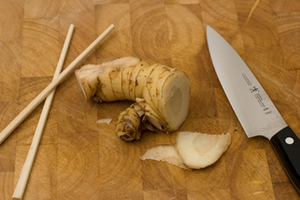
Differentiation
The word galangal, or its variant galanga, can refer in common usage to the aromatic rhizome of any of four plant species in the Zingiberaceae (ginger) family, namely:
- Alpinia galanga, also called greater galangal, lengkuas or laos
- Alpinia officinarum, or lesser galangal
- Boesenbergia rotunda, also called Chinese ginger or fingerroot
- Kaempferia galanga, also called kencur, black galangal or sand ginger
Uses
Various galangal rhizomes are used in traditional Southeast Asian cuisine, such as Khmer Kroeung (Paste), Thai and Lao tom yum and tom kha gai soups, Vietnamese Huế cuisine (tré) and throughout Indonesian cuisine, as in soto. Polish Żołądkowa Gorzka vodka is flavoured with galangal. While all varieties of galangal are closely related to common ginger, each is unique in its own right, and galangals are not typically regarded as synonymous with ginger or each other in traditional Asian dishes.
In ethnobotany, galangal has medicinal effects as it promotes digestion and alleviates respiratory diseases and stomach problems. Each galangal variety is attributed with specific medical virtues.[2][3]
In commerce, galangals are commonly available in Asian markets as whole fresh rhizome, or in dried and sliced, or powdered form.
| This article uses material from the Wikipedia article Metasyntactic variable, which is released under the Creative Commons Attribution-ShareAlike 3.0 Unported License. |