Siling haba ("long chili"), espada ("sword" in Spanish), siling mahaba, siling pangsigang ("chili for sinigang"), siling Tagalog ("Tagalog chili"), and sometimes called green chili, finger chili or long pepper,[1][2] is one of two kinds of chili common to the Philippines and Filipino cuisine, the other being siling labuyo. Unlike siling labuyo, it belongs to the species Capsicum annuum.[3]
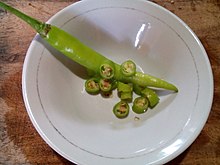
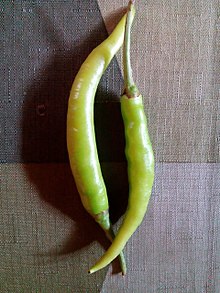

The siling haba fruit grows to between five and seven centimeters long, and is bright light green in color.[2] While of moderate spiciness, it is much milder and less hot than siling labuyo.[4] It is an ingredient commonly used in Philippine cuisine, spicing up dishes like sinigang, dinuguan, pinangat, kilawin, paksiw, and sisig.[2]
| This article uses material from the Wikipedia article Metasyntactic variable, which is released under the Creative Commons Attribution-ShareAlike 3.0 Unported License. |
Siling haba ("long chili"), espada ("sword" in Spanish), siling mahaba, siling pangsigang ("chili for sinigang"), siling Tagalog ("Tagalog chili"), and sometimes called green chili, finger chili or long pepper,[1][2] is one of two kinds of chili common to the Philippines and Filipino cuisine, the other being siling labuyo. Unlike siling labuyo, it belongs to the species Capsicum annuum.[3]
The siling haba fruit grows to between five and seven centimeters long, and is bright light green in color.[2] While of moderate spiciness, it is much milder and less hot than siling labuyo.[4] It is an ingredient commonly used in Philippine cuisine, spicing up dishes like sinigang, dinuguan, pinangat, kilawin, paksiw, and sisig.[2]
| This article uses material from the Wikipedia article Metasyntactic variable, which is released under the Creative Commons Attribution-ShareAlike 3.0 Unported License. |